In the global search for environmentally friendly solutions, a material that was once considered industrial waste has now been transformed into “brown gold” for the agricultural and environmental sectors. One such material is finely processed coconut husk, commonly known as cocopeat.
Cocopeat is one of many alternatives that can contribute to environmental solutions around the world. This material is not merely an alternative growing medium, but also an important pillar in the transition toward a more circular and sustainable economy.
What Is Cocopeat?
Once a coconut has been processed into copra, coconut flour, coconut water, and coconut oil, two forms of waste remain: coconut shells and coconut husks. Coconut shells, commonly known as coconut shells or “batok kelapa,” are usually processed into charcoal for biomass energy industries or used as a primary raw material for activated carbon. Coconut husk waste is processed into cocopeat (fine coconut husk fiber)—which is the main topic of this article—and coco fiber (coarse coconut husk fiber).
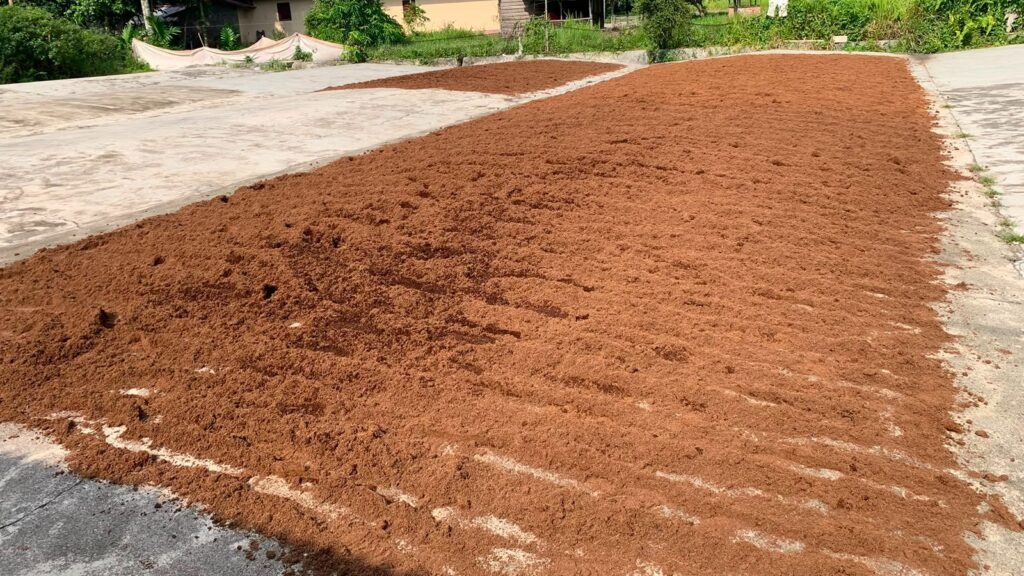
Cocopeat and coco fiber are produced by screening fresh coconut husks that have been dried and separating the coarse fibers from the fine particles. The fine material that becomes the basis for cocopeat then undergoes a cleaning process through soaking and rinsing using clean water of a certain quality. Once the soaking and rinsing processes are complete, the cocopeat is ready for use. No chemicals are used in the production process, making cocopeat an organic growing medium processed through a specific extraction process.
One important thing to understand is that the use of cocopeat growing medium provides a significant direct impact across various scales of users, from home gardening enthusiasts to large-scale agricultural industries. Although it looks similar to soil, cocopeat has superior physical properties that make it an excellent medium for plant growth.
Cocopeat is a preferred growing medium for hydroponic systems and nurseries because of its ability to retain nutrients and water efficiently. As a lightweight, clean, and easy-to-use growing medium, cocopeat has become an important solution for home gardening, modern agriculture, and plantation industries, as well as urban communities with limited land. Cocopeat can be used for plants ranging from ornamental plants such as succulents to organic vegetables.
In addition to the advantages and capabilities mentioned above, cocopeat also helps improve soil structure. With proper processing and management techniques, cocopeat is often used to re-green degraded land or former mining areas.
Cocopeat, Global Demand, the Blue and Green Economy
Based on the benefits and functions of cocopeat, as well as global research findings, cocopeat is becoming increasingly sought after by the global market due to its unique characteristics and high economic value. Cocopeat has a high water absorption capacity, allowing it to retain water at 5–10 times its original weight while keeping the root zone moist for longer. With these characteristics, the agricultural and plantation industries can use water more efficiently, helping to support long-term food security for communities around the world.
This is particularly beneficial in the current global warming situation, which is causing droughts in many parts of the world. Cocopeat provides good aeration through its macro- and micropores, which help ensure that oxygen reaches plant roots effectively. Therefore, cocopeat can be considered a 100% biodegradable waste-to-value by-product.
The integration of cocopeat into the national and global economy is a clear manifestation of the synergy between the BLUE ECONOMY (the utilization of marine and coastal resources) and the GREEN ECONOMY (environmental sustainability). In the past, coconut husks were often burned or simply discarded, causing soil and air pollution as well as clogged waterways. Processing coconut waste into cocopeat is one way to reduce solid waste while creating a high-value national and export commodity.
Within the framework of the green economy, water efficiency has recently become a global priority. The use of cocopeat significantly reduces the frequency of plant watering, which means lower freshwater consumption, an important step in maintaining food security amid global climate change.
In addition, cocopeat is an alternative to peat moss. The extraction of peat moss often damages wetland ecosystems and releases significant amounts of carbon. This is why cocopeat can serve as a low-carbon solution for the world, as it comes from a renewable resource that is replenished every season.
Conclusion – Cocopeat for Local Communities
Today, the coconut processing industry in tropical countries is creating new employment opportunities for local communities. Processing coconut husk waste into coco fiber and cocopeat creates its own supporting sub-industry, which contributes to strengthening the economic resilience of coconut-producing communities as a whole, in line with the Sustainable Development Goals (SDGs).
To take this conclusion further, cocopeat is no longer simply about growing plants in pots. It represents how simple innovation can address major environmental challenges. By moving from soil to this organic waste-based material, Tanococo, as a supplier of cocopeat growing medium, is actively contributing to and supporting the development of a smarter, cleaner, more environmentally conscious, and more sustainable economic ecosystem for future generations.
As part of the younger generation, Tanococo is committed to advancing and supporting economic and food resilience through smart and measurable approaches that are environmentally conscious and demonstrate global awareness for the future of young people and generations to come.